Olive oil does not improve with age. A cool, dark place with a stable temperature, a tightly closed cap, distance from the cooker and a container size suited to your usage all help preserve freshness.
Why does olive oil change over time?
Volatile aromas and some antioxidant compounds decline with time. As oxidation progresses, fruitiness weakens and rancid impressions may emerge. Even an oil of high initial quality deteriorates when it is exposed unnecessarily to light, heat and air.
There is no universal shelf life
Shelf life depends on cultivar, starting quality, fatty-acid and phenolic profile, filtration, packaging and storage. A universal promise that an opened bottle spoils after exactly a certain number of days is therefore misleading. Follow the producer’s batch-specific best-before date and storage instructions.
Limiting light, heat and oxygen
Keep the bottle away from the hob, oven, windows and constantly lit shelves. Close it immediately after every use. A cool kitchen cupboard is practical for most homes; “cool” means avoiding high and fluctuating temperatures, not necessarily refrigeration.
Container size and packaging
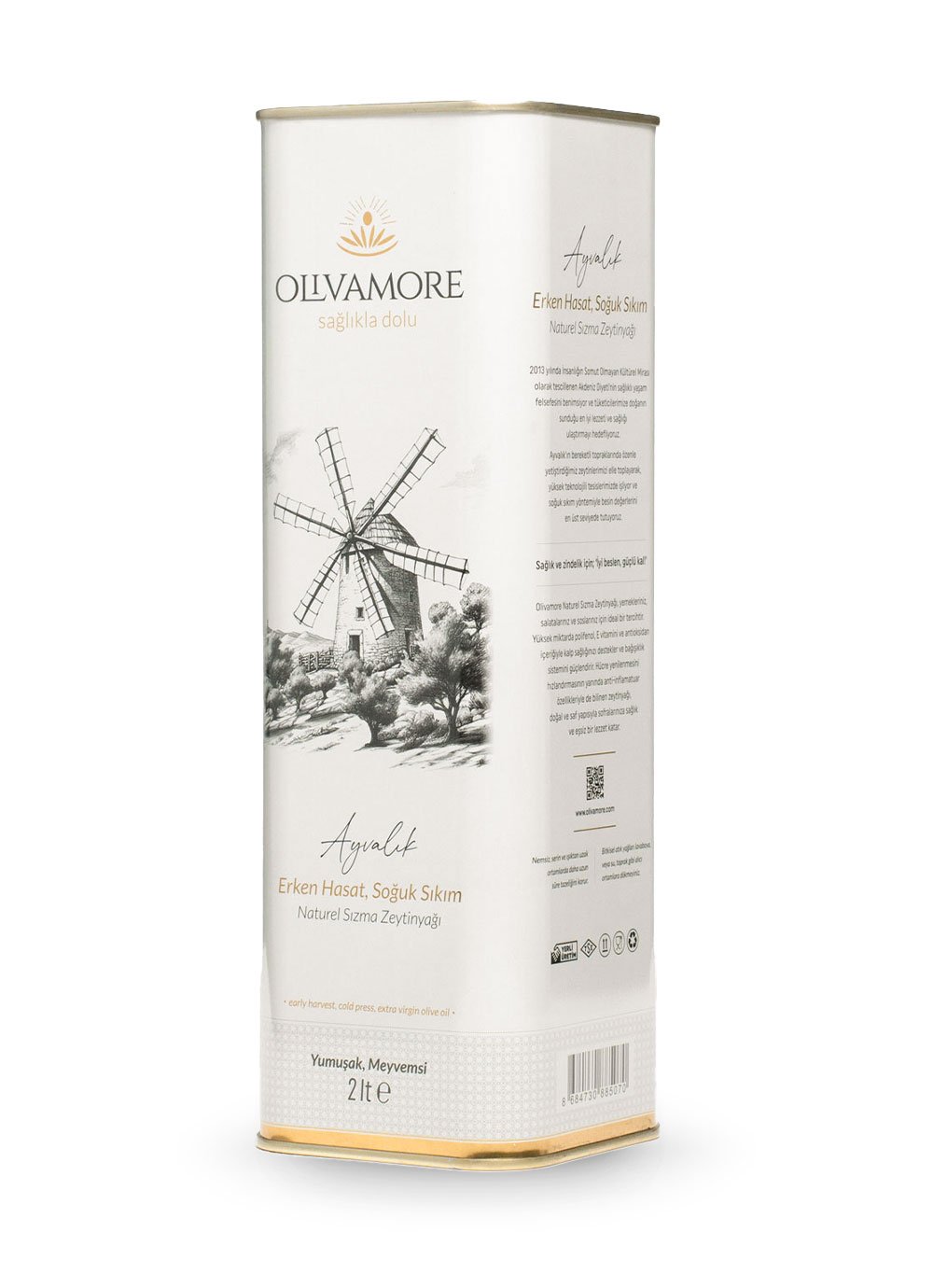
Dark glass and properly lined tins can protect against light, but good packaging cannot fully correct poor storage. In a large container used slowly, headspace grows as the oil level falls. If a large tin is not consumed quickly, measured transfer into a clean, small and light-protective daily container can be considered.
Cloudiness, sediment and rancidity
Cloudiness or partial solidification in the cold does not prove purity or spoilage; the oil may become clear again as it warms. Loss of fresh fruitiness with impressions of stale nuts, old wax, cardboard or tired oil may indicate rancidity. Formal classification still requires a trained panel and chemical analysis.
Practical checklist
- ●Store the oil in a dark, cool cupboard.
- ●Keep it away from the hob, oven and windows.
- ●Close the cap immediately after each use.
- ●Buy a volume suited to your consumption rate.
- ●Finish the older bottle first and never leave oil open.
Solidifying in a refrigerator is not an authenticity test, and sediment or cloudiness does not always mean spoilage. Product-specific shelf life requires validation of the actual oil, process, package and storage conditions.
Sources and further reading
The article distinguishes general evidence from claims about a specific Olivamore batch.